Consumer Proposal vs Debt Consolidation vs Bankruptcy in Canada
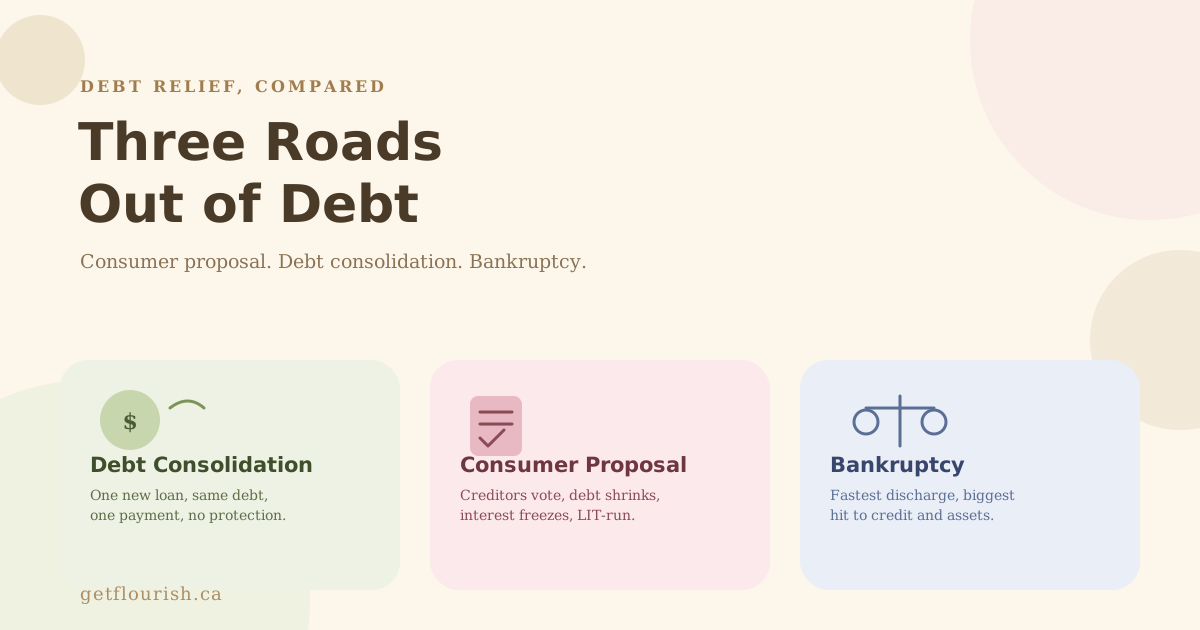
A debt consolidation loan refinances what you owe into one payment, but you still owe the full amount and interest keeps running. A consumer proposal, arranged through a Licensed Insolvency Trustee, legally cuts your debt and freezes interest. Bankruptcy discharges debt fastest, but it costs you more on your credit report and can mean giving up assets.
If a tighter budget and a balance transfer have not been enough, these are the three real options left in Canada, and they solve different problems. A Licensed Insolvency Trustee is legally required to walk you through all three in a free consultation, not just steer you toward one, so knowing the differences before that call matters.
What a Debt Consolidation Loan Actually Is
A debt consolidation loan is a new personal loan or line of credit used to pay off several existing debts at once, leaving you with a single monthly payment instead of five different due dates. It is not a government process. No trustee is involved, nothing is reported to the Office of the Superintendent of Bankruptcy, and your total debt does not shrink. You still owe every dollar you owed before, just to one lender instead of several.
The appeal is real when it works: one payment is easier to manage than several, and if your credit is strong enough to qualify for a lower rate than your cards charge, you pay less interest overall. The catch is the same one that traps a lot of people looking at this option: the credit score you need to get approved for a meaningfully lower rate is often the credit score you no longer have once you are carrying several maxed-out cards. Lenders see the same risk you are trying to escape.
What a Consumer Proposal Actually Is
A consumer proposal is a legally binding offer, prepared and filed by a Licensed Insolvency Trustee, to pay your creditors back a portion of what you owe, usually over 3 to 5 years, with a hard maximum of 60 months. It is only available for up to $250,000 in unsecured debt, not counting a mortgage on your home (RBC).
Your creditors vote on the proposal, and once creditors holding 50% of the voted dollar value accept it, the deal becomes binding on every creditor it covers, including the ones who voted against it. Interest stops accruing the moment the proposal is filed, so every payment you make actually reduces what you owe instead of partly covering interest that keeps piling up (MNP Debt). A consumer proposal shows up on your credit report as an R7 rating, Equifax and TransUnion's code for a negotiated repayment arrangement, and it typically clears a few years after your final payment, not a few years after you filed (DebtNorth).
What Bankruptcy Actually Means in Canada
Personal bankruptcy in Canada is administered by the same Licensed Insolvency Trustees who handle consumer proposals, and it is regulated by the Office of the Superintendent of Bankruptcy (OSB). Filing discharges your remaining unsecured debt, but it comes with real tradeoffs: you may have to surrender non-exempt assets (what counts as exempt varies by province), and a trustee's fees are built into the process.
For a first-time bankruptcy, you are typically eligible for an automatic discharge after 9 months if you have no surplus income, or 21 months if you do. A second bankruptcy stretches that to 24 or 36 months depending on surplus income, and a third bankruptcy has no automatic discharge at all, a judge decides the timing (Hoyes Michalos). Bankruptcy shows on your credit report as an R9, the lowest rating, and it stays on file for roughly 6 to 7 years after your discharge date depending on the credit bureau and your province, and 14 years from the second discharge if it happens twice.
How They Compare Side by Side
| Debt Consolidation Loan | Consumer Proposal | Bankruptcy | |
|---|---|---|---|
| Reduces what you owe | No, same principal, new lender | Usually yes, a negotiated amount | Yes, remaining unsecured debt is discharged |
| Interest | Still accrues at the loan's rate | Frozen the day it is filed | Frozen the day you file |
| Credit report code | Normal account history, no special flag | R7, roughly 3 years after your last payment | R9, 6 to 7 years after discharge |
| Typical length | Whatever term you choose | Up to 60 months | 9 to 21 months (first time) |
| Who runs it | A bank or credit union | A Licensed Insolvency Trustee, regulated by OSB | A Licensed Insolvency Trustee, regulated by OSB |
A Real Canadian Example
Say you are carrying $28,000 in credit cards and a line of credit, blended at roughly 20.5%, close to the national average on outstanding credit card balances reported by the Bank of Canada (Bank of Canada).
If you qualify for a consolidation loan at 10.99% over 5 years, your payment is about $608.65 a month, and you pay roughly $8,519 in interest over the term, on top of the full $28,000 principal. That is real savings over continuing to carry the same balance at 20.5%, which would cost close to $16,978 in interest on the same timeline, but you still owe every dollar of the original $28,000.
Now say instead your trustee negotiates a consumer proposal where your creditors agree to accept 45% of the balance, a plausible outcome but not a guaranteed one, since the actual percentage depends on your income, assets, and what creditors would recover in a bankruptcy instead. That works out to $12,600 total, paid interest-free over 60 months, or $210 a month. You pay less overall than either the loan or carrying the balance, but it costs you the R7 mark on your credit report and the fact that your creditors had to agree to take a loss.
Bankruptcy does not have a comparable monthly payment figure here, because the $28,000 in unsecured debt is discharged rather than repaid, aside from any surplus income contribution and trustee fees. The tradeoff is the R9 rating and a longer stretch before your credit report clears, plus the risk to non-exempt assets depending on your province.
How getFlourish Handles This
getFlourish will not tell you which of these three is right for your situation, that call depends on your income, assets, and what a Licensed Insolvency Trustee's free consultation actually turns up, and no app should pretend otherwise. What it does do is let you track every debt's real balance and rate in one place first, so you walk into that consultation with actual numbers instead of a guess, and keep tracking whatever payment plan you land on afterward.
Run your own current numbers, not the example above, on the debt payoff calculator. If you are not at this point yet and still weighing a stricter payoff order against your existing balances, Debt Snowball vs Avalanche covers the two most common methods, and How to Pay Off Credit Card Debt in Canada walks through when a consumer proposal is worth raising with a trustee in the first place. Getting your pay cycle under control first can also change the math, our guide on budgeting a biweekly paycheque covers that groundwork.
Frequently Asked Questions
Is a consumer proposal the same thing as bankruptcy?
No. A consumer proposal keeps your debt in place but reduces and freezes it under a legally binding agreement with your creditors, and you keep your assets. Bankruptcy discharges the debt entirely but can require giving up non-exempt assets and carries a harsher, longer credit report mark.
Will a debt consolidation loan hurt my credit score?
Taking on a new loan triggers a hard credit check, which can cause a small, temporary dip. Beyond that, a consolidation loan is reported like any other loan, it does not carry a special negative code the way a consumer proposal or bankruptcy does, as long as you keep making payments on time.
How much debt do I need to qualify for a consumer proposal in Canada?
You need to owe no more than $250,000 in unsecured debt, not counting a mortgage on your home. There is no minimum amount, but most Licensed Insolvency Trustees will tell you in a free consultation whether your specific balance and income make a proposal worthwhile compared to the alternatives.
How long does bankruptcy stay on your credit report in Canada?
For a first bankruptcy, roughly 6 to 7 years from your discharge date, the exact number depends on whether Equifax or TransUnion is reporting and which province you are in. A second bankruptcy stays on file for 14 years from your second discharge.
Can I use a debt consolidation loan instead of a consumer proposal?
Only if a lender is willing to approve you at a rate meaningfully lower than what you are currently paying, since a consolidation loan does not reduce your principal the way a proposal does. If your credit is already damaged enough that lenders are declining you or only offering rates close to your current cards, a consumer proposal addresses a problem a consolidation loan cannot.