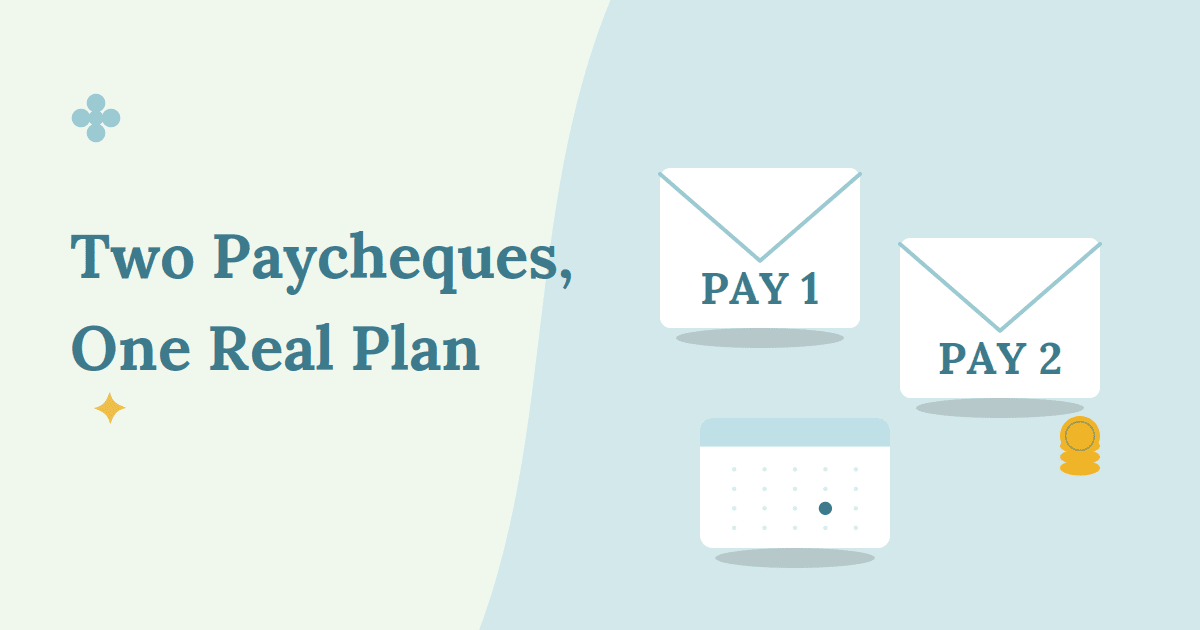
Biweekly pay is one of the most common pay schedules in Canada, and one of the most confusing to budget around.
The Core Problem With Monthly Budgets
Most budgeting advice assumes you get paid once a month. Biweekly pay does not work that way. You get paid every two weeks, which means some months bring you two paychecks and others bring three.
Without a plan for this rhythm, those extra paychecks tend to quietly disappear into everyday spending instead of doing anything useful. This is also why flat percentage systems like the 50/30/20 rule can feel harder to apply here than they look on paper, they were not built with a two-week cycle in mind.
The getFlourish Method
Split your monthly budget into two halves, one for each paycheck.
Paycheck 1, roughly the 1st to the 15th. Cover your smaller fixed costs first, such as phone, subscriptions, and car insurance. Then handle variable expenses like groceries, gas, and dining for that period.
Paycheck 2, roughly the 16th to month end. Cover your largest fixed cost here, usually rent or your mortgage payment. Then handle whatever variable expenses remain for the rest of the month.
This structure matches how money actually arrives, instead of forcing a monthly mindset onto a biweekly reality.
The Three Paycheck Windfall
About twice a year, the calendar lines up so you receive a third paycheck within a single month. This is one of the most valuable financial moments available to biweekly earners, and most people waste it.
Use that extra paycheck for one of these three goals:
- Fully fund your emergency fund if it is not there yet
- Make a lump sum payment on your highest priority debt
- Pay next month's rent in advance if your situation allows it
Inside getFlourish, you can add a third paycheck as an extra income line under Paycheck 2 for that specific month, so it shows up clearly in your plan.
The Bottom Line
Biweekly budgeting works once you stop thinking in calendar months and start thinking in pay periods. Give every dollar from each paycheck a specific job the moment it lands in your account.
If you are also weighing which app to actually use for this, our roundup of budgeting apps for biweekly pay breaks down the options, and why getFlourish does not require a bank connection is worth reading if privacy is part of your decision.
Frequently Asked Questions
How many three paycheck months happen in a year with biweekly pay? Most years bring two, sometimes three, depending on the calendar and your specific pay dates. These months always feel like a bonus, so it helps to plan for them in advance.
Should I budget biweekly or monthly if I get paid every two weeks? Budget per paycheck, not per month. Splitting your bills and spending across each individual pay period matches how your money actually arrives and prevents cash flow gaps near the end of the month.
What is the best way to track a biweekly budget? Use a planner built around paycheck cycles rather than calendar months. getFlourish organizes income and expenses into Paycheck 1 and Paycheck 2 automatically, which removes the guesswork of mapping biweekly pay onto a monthly grid.