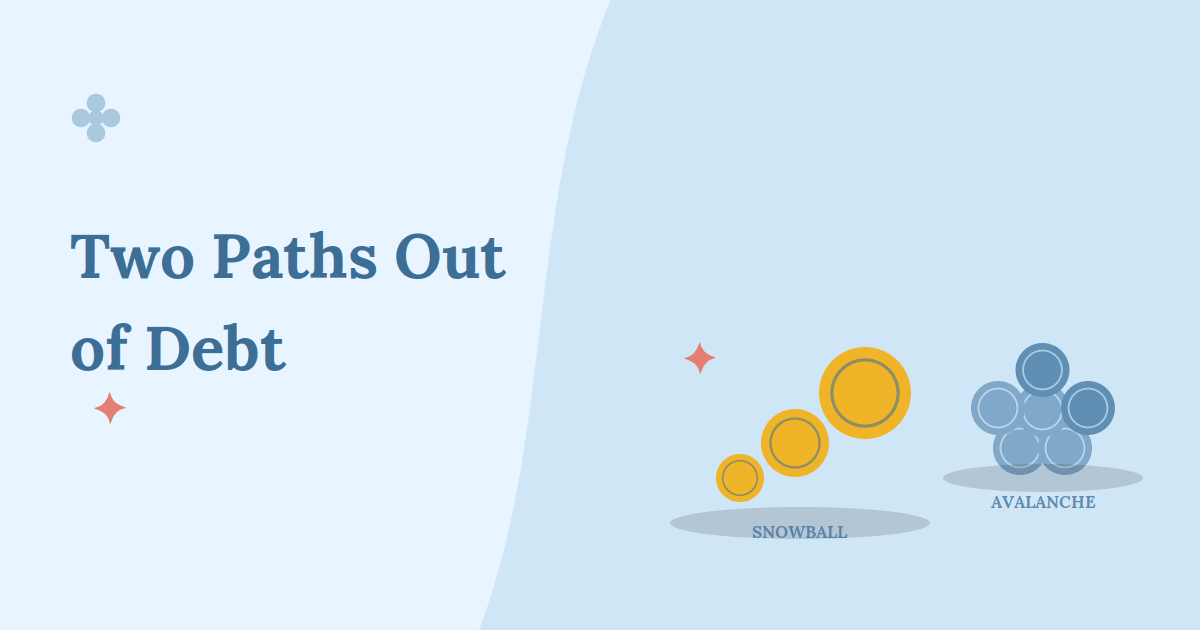
The debt snowball and the debt avalanche are the two most well known debt payoff strategies. Both work. They just work in different ways, and for different kinds of people.
If a shrinking debt balance is one of the reasons you are here, it is often paired with the other warning signs covered in 5 signs you need a budget.
The Debt Snowball
Pay the minimum on every debt, then put all extra money toward your smallest balance first.
Why it works. You get fast, visible wins early on. Paying off a small four hundred dollar store card delivers a real sense of momentum that keeps most people going.
The tradeoff. This method usually costs more in total interest over time compared to the alternative.
Best for. Anyone who needs motivation to stay consistent. If you have tried to pay off debt before and quit partway through, this is likely your method.
The Debt Avalanche
Pay the minimum on every debt, then put all extra money toward whichever debt carries the highest interest rate first.
Why it works. It is mathematically optimal. You pay the least amount of interest possible across the full payoff period.
The tradeoff. Progress can feel slow at first if your highest interest debt also happens to have the largest balance.
Best for. People with strong financial discipline who stay motivated by the math itself, even without frequent small wins along the way.
Which One Should You Actually Use?
The one you will stick with until your debt is gone.
A plan you follow imperfectly will always beat a perfect plan you abandon after two months. Inside getFlourish, a budgeting app that does not require linking your bank account, you can track either strategy. Simply list your debts in your preferred order and set your extra payments, and the app calculates your real payoff date automatically.
Freeing up more money for extra payments usually starts with tightening variable spending first, our spending tracker guide walks through exactly how to do that inside the app.
The goal is not to win an argument about which method is mathematically superior. The goal is to become debt free.
Frequently Asked Questions
Which is faster, debt snowball or avalanche? The avalanche method is faster and cheaper on paper because it targets the highest interest rate first. In practice, many people finish faster with the snowball method simply because the early wins keep them consistent.
Can I switch between snowball and avalanche? Yes. Many people start with the snowball method for early motivation, then switch to avalanche once a habit is established and the remaining debts carry meaningfully different interest rates.
How do I track my debt payoff progress in Canada? A debt tracker that lets you order your debts manually, like the one built into getFlourish, works for either strategy. List your debts in whichever order matches your method, then enter your minimum and extra payments to see your projected payoff date update automatically.